Final Walkthrough and Punch List Basics
A plain-English guide to the final walkthrough and punch list for homeowners — what to check, what to document, and how to protect yourself before releasing final payment on your renovation.
Articles on this site may include sponsored content. If they do, it's labeled clearly — and it still has to answer a real homeowner question. Same bar as everything else here.
Your kitchen remodel has been going on for eight weeks. The dust is finally settling. The cabinets are in, the countertops look great, and the crew is packing up their tools. Your contractor says, “Let’s do a walkthrough next week — we’ll make a list of anything that needs touching up, and then we’ll wrap up the final payment.”
This is the moment where good projects go smoothly and messy projects fall apart. The final walkthrough and punch list are your last chance to catch issues before you hand over the final check. Do it right, and you’ll close out the project feeling good. Rush through it or skip it entirely, and you’ll be chasing fix-it requests for months.
Here’s exactly how to handle a final walkthrough and punch list, step by step.
What is a final walkthrough?
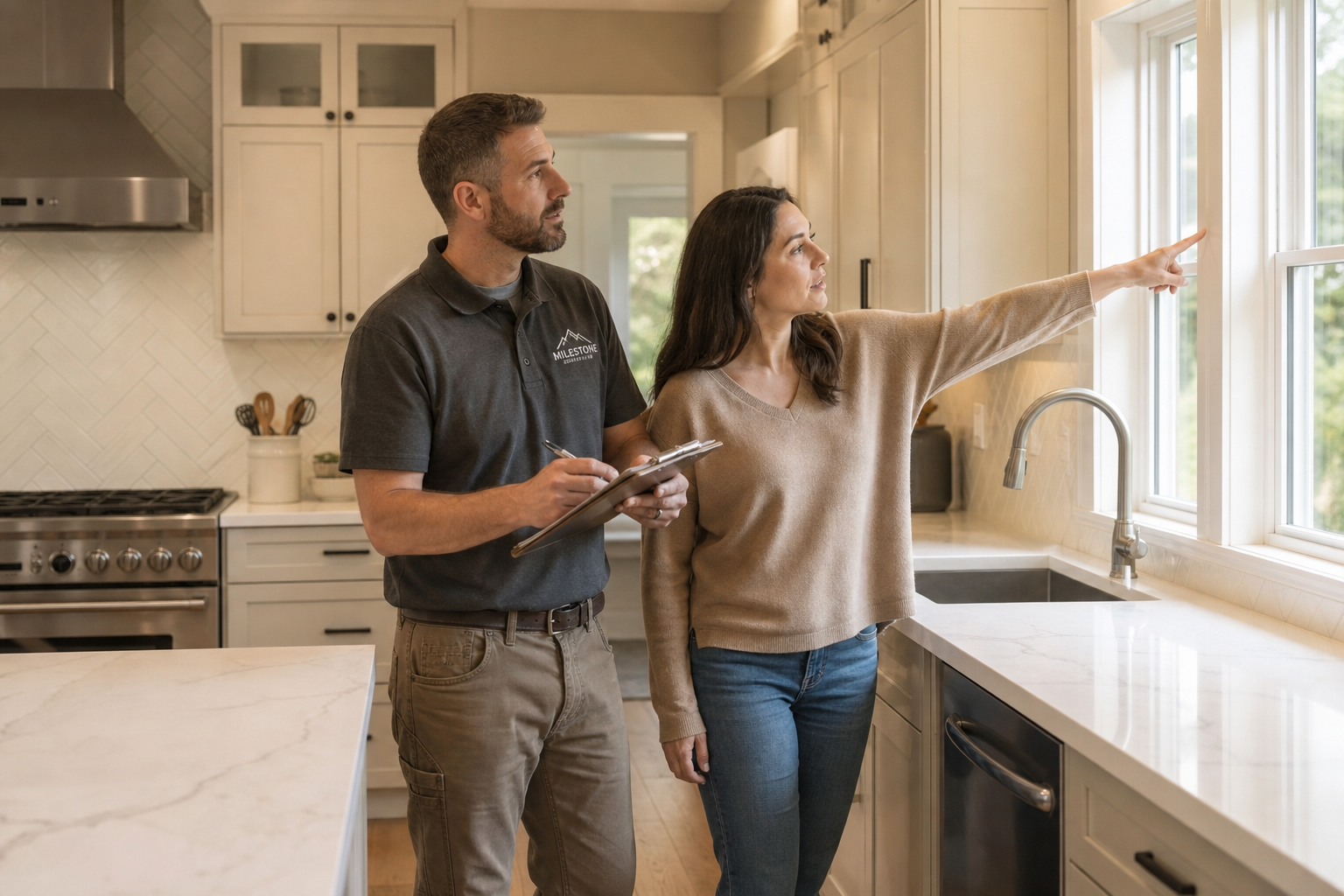
The final walkthrough is a meeting between you and your contractor — ideally at the project site, after the work is substantially complete — where you inspect the finished work together. It’s your opportunity to verify that everything matches what was promised in the contract and that any issues are documented.
What the walkthrough is NOT
Let me clear up a common misconception: the final walkthrough is not a second home inspection. It’s not the time to discover that the floor plan doesn’t work for you or that you wish you’d picked different tile. Those decisions should have been made months ago.
The walkthrough is about quality control. You’re checking that the work matches the scope of work in your contract, that installations are done properly, and that cosmetic defects are captured. It’s not a design review — it’s a closeout verification.
When should the walkthrough happen?
Schedule the walkthrough after the contractor says the project is substantially complete. “Substantially complete” means the work is usable for its intended purpose — your kitchen cabinets are installed, countertops are in, appliances work, and finish work is done. There may still be minor items to address, but the bulk of the project is finished.
Don’t schedule the walkthrough too early. If the painter still needs another coat or the tile still needs grouting, you’ll be making a list of things that are already on the contractor’s list. Wait until the contractor calls you and says, “We’re done — come take a look.”
Also, don’t schedule it too late. The walkthrough should happen within a week or two of substantial completion. If you wait a month, the contractor may have moved on to other projects, and getting them back for punch list items becomes harder.
Who should be there?
You and your contractor should both be present. If you have a designer, architect, or owner’s representative who’s been involved in the project, include them too. The goal is to have everyone who needs to make decisions about fixes in the same room at the same time.
How to prepare for the walkthrough
A little preparation goes a long way. Before you show up for the walkthrough, do this:
Dig up your contract and scope of work. Print out the scope of work section and bring it with you. You’ll reference it constantly.
Make a list of things you’ve noticed. Over the last few weeks, you’ve probably seen a few things that didn’t look right. Write them down ahead of time so you don’t forget.
Bring a flashlight, phone (for photos), and a notepad. You’ll be looking into corners, behind doors, and under cabinets. A flashlight helps. Photos are your best documentation tool. A notepad keeps you organized.
Bring your punch list from earlier in the project (if any). If you already had a rough punch list from a mid-project walkthrough, bring it so you can check off items that have been resolved.
Bring a small level (or use your phone). Check that countertops, shelves, and cabinets are level. Your phone has a level tool — use it.
What to check during the walkthrough
Go room by room. Don’t try to inspect the whole project from one spot. Walk through each space methodically and check the same categories in each room.
Visual finishes
Look at the surfaces. Everything that’s meant to be finished should look finished. Here’s what to check:
Paint. Are there drips, runs, or thin spots? Is the color consistent? Did they paint behind the toilet and under the sink (places you can see when you look)? Are the edges crisp where paint meets trim?
Tile. Are the grout lines even? Is the tile pattern consistent? Any cracked or chipped tiles? Is the grout sealed (if specified in the contract)? Any lippage (tiles that are uneven with their neighbors)?
Flooring. Are there gaps between floorboards or tiles? Any scratches or damage? Are transitions to other flooring materials smooth and even? Is the flooring installed consistently (no squeaks, no loose boards)?
Trim and molding. Are the corners mitered neatly? Any gaps between trim and the wall or floor? Is the caulk clean and smooth? Are nail holes filled and painted?
Cabinets and millwork. Do all doors and drawers open and close smoothly? Are the hinges adjusted properly (no sagging doors)? Is the finish consistent across all cabinets? Are the handles and knobs installed straight and tight?
Functionality
It’s not enough for things to look good — they need to work too.
Doors. Open and close every door in the project. Do they swing freely? Do the latches catch properly? Any rubbing or scraping? Do pocket doors slide smoothly?
Windows. Open and close each window. Do they operate smoothly? Do the locks engage? Is the weatherstripping in place? Any drafts?
Plumbing fixtures. Turn on every faucet. Check hot and cold water. Look for leaks under sinks. Flush every toilet. Run the dishwasher through a cycle. Test the garbage disposal. Fill sinks and tubs and check drainage.
Electrical. Test every outlet with a plug-in device (a phone charger works). Flip every switch. Test the garbage disposal switch. Check that dimmers work properly. Test bathroom exhaust fans. Make sure all light fixtures have the correct bulbs.
Appliances. Run each new appliance through a basic function test. Does the oven heat? Does the refrigerator cool? Does the microwave spin? Does the dishwasher fill and drain?
HVAC. If the project included HVAC work, run the system through a full cycle. Does heat come out of the right vents? Does air conditioning work? Is the thermostat functioning properly? Any unusual noises or smells?
Outside the project area
Even if your project was just a kitchen, check the spaces next to it. Was there damage from the construction process that hasn’t been addressed? A scratch on the hardwood floor in the hallway? A dent in the living room wall where the crew moved appliances? These should be on the punch list too.
Cleanliness and debris
The job site should be clean at closeout. Check for:
- Construction debris in the yard or driveway
- Dust on surfaces (a reasonable amount of dust is normal during a remodel, but the final cleanup should remove most of it)
- Protective materials (cardboard, tape, plastic) that haven’t been removed from floors or surfaces
- Paint splatters on windows, hardware, or adjacent surfaces
- Sticker residue on new appliances or fixtures
What is a punch list?
A punch list is simply a written list of items that need to be completed, repaired, or corrected before the project is considered fully finished. The name comes from the old practice of “punching” a hole next to each item on a printed list once it was completed.
A well-written punch list item is specific. Instead of “fix the trim,” it says “replace the quarter-round molding on the north wall of the kitchen, between the cabinet toe-kick and the floor — the existing piece is split.” Instead of “touch up paint,” it says “paint touch-up needed on the south wall of the living room, near the window, 3-inch scuff mark.”
How to create a punch list
During the walkthrough, as you find issues, write them down. Your contractor should be doing the same. At the end of the walkthrough, combine both lists into a single document that you both agree on.
Include for each item: the location (specific room and wall), the issue (what’s wrong), and what “done” looks like (the fix). This eliminates ambiguity.
Date the punch list. Both parties should initial or sign it. This creates a shared understanding of what needs to happen.
Assign a priority. Not every punch list item is equally important. A cracked window pane is urgent. A small paint scuff is minor. Group items by how quickly they need to be addressed.
Set a timeline. Agree on when each item will be fixed. Minor items might be done in a week. Larger items might take longer. Get a deadline.
What belongs on a punch list vs. what doesn’t
Punch list items (legitimate):
- Chipped tile, scratched countertop, dented cabinet door
- Door that doesn’t close properly
- Outlet that doesn’t work
- Missing grout or caulk
- Paint touch-ups
Not punch list items:
- Changes to the original scope of work (those need a change order)
- Normal wear and tear (a few small nail holes in drywall that wasn’t part of the project — that’s normal)
- Issues that were there before the project started (scratched hardwood floors that were pre-existing)
- Design regrets (you wish you’d chosen a different cabinet color — that’s not a defect)
After the walkthrough: follow through
The walkthrough is done and you have a punch list. Now what?
Don’t release final payment yet
Your final payment — and any retained amounts you’ve been holding — should be held until the punch list is complete. This is your leverage. The contractor is much more likely to prioritize your punch list items if there’s real money at stake.
Schedule a follow-up walkthrough
After the contractor completes the punch list items, schedule a short follow-up walkthrough to verify the work. Don’t just take their word for it. Walk through, check each item, and mark them off the list as resolved.
Get lien waivers
Before you make final payment, collect unconditional lien waivers from the general contractor and any subcontractors or material suppliers who worked on your project. This protects you from mechanic’s liens — legal claims against your property if someone wasn’t paid.
Collect your documentation
Final closeout is also the time to collect all the paperwork you’ll need in the future:
- Warranty documents. Written warranties for labor, materials, and equipment. Know what’s covered, for how long, and how to make a claim.
- Operation manuals. Manuals for all appliances, fixtures, and systems installed in the project.
- Maintenance instructions. How to care for your new floors, countertops, cabinets, and other finishes. Different materials have different care requirements.
- Permit closeout documentation. If the project required permits, make sure the final inspection has been signed off and you have a copy.
- Paint colors and product info. Save the paint color names and batch numbers, tile model and color names, flooring product names — anything you’ll need to match touch-ups in the future.
- As-built drawings (if applicable). If your project involved structural changes, you may want updated drawings showing what was actually built.
Make final payment
Once the punch list is complete, all documentation has been collected, and lien waivers are in hand, release the final payment. Congratulations — your project is officially closed out.
Common walkthrough mistakes
I’ve seen homeowners make the same mistakes over and over. Here’s what to watch out for.
Rushing the walkthrough. The walkthrough is not a five-minute glance. Plan for at least an hour for a single-room project, longer for a whole-house renovation. Take your time.
Only looking at what’s at eye level. Get down on your hands and knees and look at baseboards and flooring. Look up at crown molding and ceilings. Check behind doors. Open cabinets and look inside. The defects you can’t see from a standing position are the ones that get missed.
Testing nothing. I’ve seen homeowners walk through a project, nod approvingly at the pretty finishes, and then discover two weeks later that the garbage disposal doesn’t work. Test everything while the contractor is still on site.
Accepting verbal promises. “I’ll come back next week and fix that” — without a written punch list and a timeline — leaves you with nothing to hold the contractor to. Get it in writing.
Making the final payment too soon. This is the #1 mistake. The project looks good, you want to wrap things up, and you release the final payment before the punch list is done. Suddenly the contractor’s availability for punch list items has mysteriously evaporated. Don’t do it. Final payment is your leverage — hold it until you’re genuinely satisfied.
Using final payment for everything. If your project used progress payments correctly, your final payment should be a relatively small percentage of the total. If you’ve been making progress payments all along and the final payment is massive, that’s a red flag in itself.
Quick Answers
How long should a punch list period last?
A reasonable punch list period is 30 days for most residential projects. This gives the contractor time to schedule subs and order any materials needed for fixes. For minor items, a week or two is sufficient. For major items (like replacing a countertop that was damaged), 30 to 60 days might be more realistic.
What happens if the contractor won’t complete the punch list?
Start with a written notification — send an email or letter listing the outstanding items and setting a deadline for completion. If they still don’t respond, you have options: withhold final payment (if you haven’t already made it), negotiate a discount to have another contractor complete the work, file a complaint with your state’s contractor licensing board, or consult an attorney.
Can I withhold payment for minor punch list items?
Yes, but be reasonable. Holding back $10,000 for a $50 paint touch-up is not reasonable. Hold back a reasonable amount — enough to cover the cost of having someone else do the work if the contractor doesn’t. If you’ve been using progress payments correctly, your final payment should already be a small enough amount that this isn’t an issue.
Do I need a separate punch list for each subcontractor?
No. One master punch list covers everything. Your general contractor is responsible for managing their subcontractors and ensuring all punch list items are completed — not you.
What if I find a problem after the project is closed out?
That’s what warranties are for. Most contractors offer a one-year warranty on workmanship. If something fails due to faulty installation, the contractor should fix it under warranty. Keep your warranty documents accessible and know how to make a claim.
Should I hire an inspector for the final walkthrough?
For large, complex projects, hiring a third-party inspector for the final walkthrough can be money well spent. They’ll catch things you’d miss and can provide an objective assessment. For smaller projects, a thorough DIY walkthrough using the checklist above is usually sufficient.